

The photo looks perfect. The room disagrees.
You've found a bed frame you love. The listing photo shows it anchoring a calm, airy bedroom with room to breathe on all sides. You add it to cart, it arrives, and suddenly you're squeezing sideways between the footboard and the dresser every morning. This isn't a taste problem — it's a measurement problem, and it's almost entirely avoidable.
Furnishing a small bedroom online is genuinely harder than furnishing a larger one. Showroom-style product photography is almost always shot in spaces far more generous than the average American bedroom. That visual bias makes pieces look smaller than they are, and in a tight room, even a few inches in the wrong direction matters. The good news: product listings already contain everything you need to make a confident decision. You just have to know which numbers to pull and what to do with them.
Start with your floor plan, not the product page
Before you open a single listing, measure your room. Get the full length and width, then note the location of every door, window, closet, and outlet. These fixed points are non-negotiable — furniture has to work around them, not the other way around.
Sketch it out on paper or use a free tool like graph paper or a basic floor-planning app. It doesn't need to be beautiful; it needs to be accurate. A 1-inch square representing 1 foot of floor space is enough to test whether a piece fits before you ever click "add to cart."
The two measurements that matter most in a small bedroom:
- Clearance around the bed. You need enough space on at least one side — ideally both — to walk without turning sideways. A common rule of thumb is roughly 24 inches of walking clearance on each accessible side, though even a little less can work on the wall side if the room demands it.
- Door swing and drawer pull. A dresser placed too close to a door creates a daily obstacle. Check that drawers and cabinet doors can open fully without hitting the bed frame, the wall, or each other.
How to read a product listing like a tape measure
Most furniture listings include at least three dimensions: overall width, depth, and height. Here's what each one actually means for a small bedroom.
Width
This is the dimension that will make or break your layout. A queen bed frame is typically wider than you expect — factor in any side rails, footboard extensions, or storage drawers that protrude beyond the mattress edge. Always check whether the listed width is the mattress platform only or the full outer frame. When in doubt, read the product description carefully and, if it's unclear, contact the retailer before buying.
Depth (front to back)
In a small bedroom, this number determines how much floor space you have left for walking and for other pieces. A bed with a substantial headboard can add several inches beyond the mattress. A storage ottoman or bench at the foot of the bed adds depth in the other direction. Map both on your sketch before committing.
Height
Height matters less for floor space but affects the feel of a room. Low-profile bed frames and platform beds tend to make a small room feel less crowded visually. Tall headboards can feel imposing in rooms with lower ceilings.
The tape-measure test you can do before ordering
Once you have the product dimensions, do this before you buy:
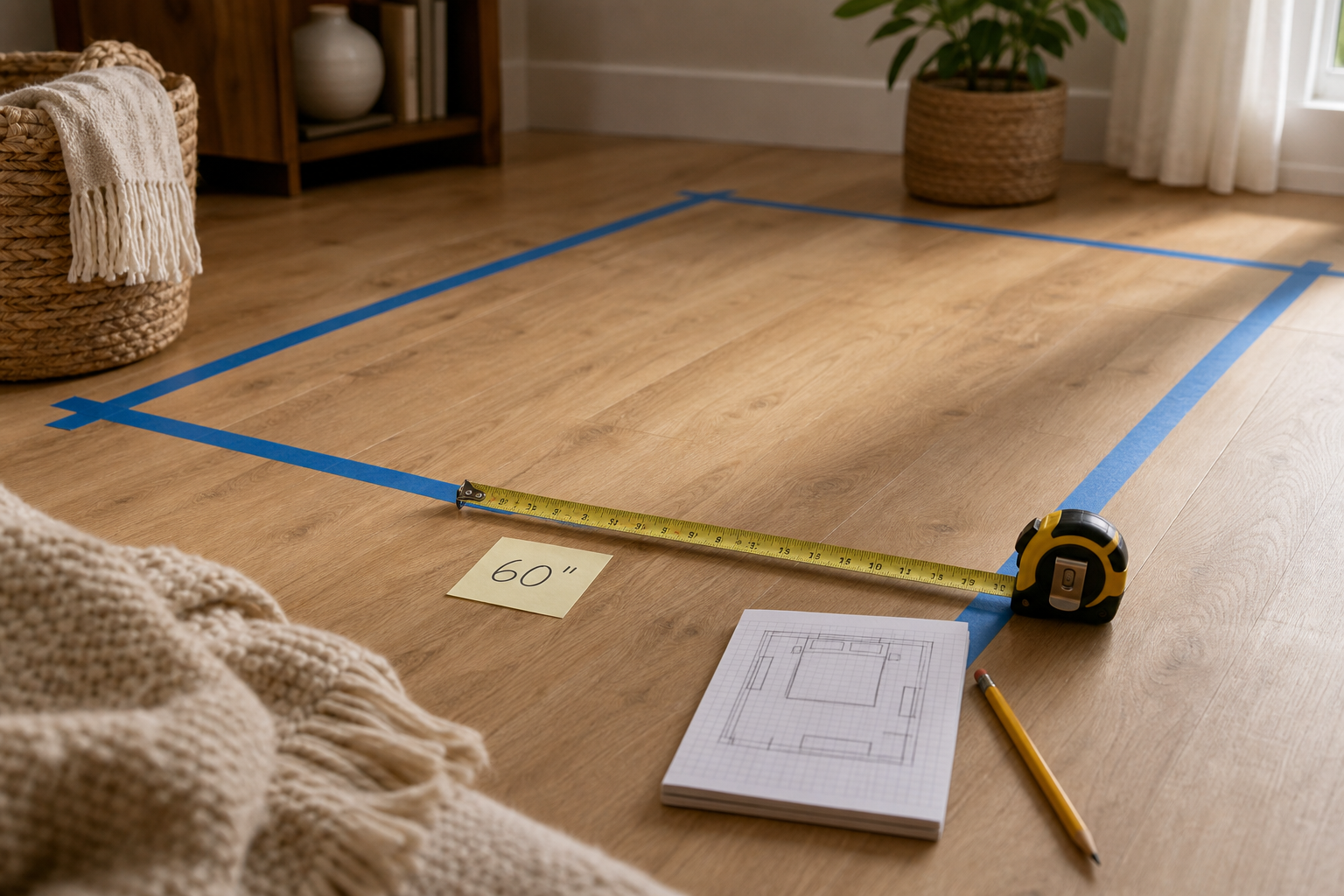
- Cut pieces of painter's tape to the exact footprint of the piece. Lay them on your actual bedroom floor. Walk around them. Open your closet. See if the door swings freely. This is the closest thing to a showroom try-on you can do at home — and it costs nothing.
- Check the diagonal clearance for delivery. A piece that fits your room might not fit through your hallway or up a staircase. Measure your doorways and any tight turns on the delivery path. Most listings will note the dimensions of the largest assembled component, but if yours doesn't, ask.
- Sketch the full room, not just the one piece. A bed that fits perfectly in isolation can crowd out your dresser, nightstands, and any other storage you need. Map everything at once.
Which bedroom pieces are most forgiving in tight spaces
Not all furniture is equally punishing in a small room. Some categories give you more flexibility than others.
Platform beds and low-profile frames
These eliminate the need for a separate box spring, which saves a few inches of height and often results in a slimmer overall profile. They also tend to read as less bulky in a small room, even when the footprint is identical to a traditional frame.
Beds with built-in storage
A bed frame with drawers underneath does double duty — it replaces or reduces the need for a separate dresser, freeing up significant floor space. If your room can't comfortably fit a bed plus a full dresser, this is worth prioritizing.
Nightstands with vertical storage
A tall, narrow nightstand with drawers takes up less floor space than a wide, low one. In a very tight room, a wall-mounted shelf can replace a nightstand entirely and reclaim the floor completely.
Dressers versus chests
A chest of drawers (taller, narrower) typically has a smaller footprint than a wide horizontal dresser. If you're choosing between the two, the chest almost always wins in a small room — same storage capacity, less floor space consumed.
The one mistake that's easy to skip but costly
Not accounting for the visual weight of a piece, only its physical dimensions. A dark, solid-panel bed frame can make a small room feel closed in even if it technically fits. Glass, open-frame metal designs, and lighter wood finishes tend to read as less heavy. This isn't about aesthetics alone — it genuinely affects how livable the room feels day to day. When you're browsing listings, look at the design structure, not just the color swatch.
If you're newer to buying furniture online and want a broader checklist for evaluating listings before you commit, this guide to buying furniture online for the first time covers what to look for across all the details that matter — dimensions, materials, return policies, and more.
Use these measurements as your guide, then browse Select Furniture's bedroom collection — every listing includes full dimensions and free shipping across the U.S., so you can plan your layout with confidence before anything leaves the warehouse.
Frequently Asked Questions
What size bed frame works best in a 10x10 bedroom?
A twin or full-size bed frame is generally the most practical choice in a 10x10 room because it leaves enough clearance on the sides and at the foot for comfortable movement. A queen can work in a 10x10, but you'll likely need to forgo a dresser or push the bed against one wall to make the layout function. Use the tape-measure test on your actual floor before deciding.
How much walking space do I need around a bed?
A commonly cited guideline is around 24 inches of clearance on each accessible side of the bed — enough to walk through without turning sideways. On the wall side, you can get away with less. At the foot of the bed, aim for enough space to open any doors or drawers that are nearby.
Can I trust the dimensions listed on a furniture product page?
Generally yes, but read carefully. Some listings give the mattress platform dimensions rather than the full outer frame, which can be several inches smaller than the actual footprint. Always check whether the listed width and depth include any protruding rails, storage drawers, or footboard details. If the listing is unclear, contact the retailer directly before ordering.
What's the easiest way to visualize furniture in my room before buying?
The simplest method is painter's tape on the floor — cut strips to the exact width and depth of the piece and lay them out in your room. Walk around them, open doors, and check clearances. It takes five minutes and gives you a far more honest sense of fit than any product photo. Free floor-planning apps can also help if you prefer a digital approach.