

The rental living room trap
You move in, the walls are beige, the lighting is one harsh overhead fixture, and the layout makes zero sense for how you actually live. You want to make it feel like home, but you're also quietly calculating what you can't touch — no paint, no holes bigger than a thumbtack, nothing that could cost you that deposit when you eventually move out.
The result? A lot of renters just... don't bother. They live with the beige and the bad lighting and tell themselves it's temporary. But temporary can last years, and you deserve a space that feels good to be in right now.
The good news: furniture, lighting, and the right decor choices do more for a room than a fresh coat of paint ever could. Here's how to actually pull it off.
Start with the furniture layout — this is the real game-changer
Most people push all the furniture against the walls. It feels safe, like it maximizes space. It actually makes the room feel like a waiting room. Pull your sofa and chairs inward, toward the center of the room, and orient them around a focal point — a coffee table, a TV stand, a rug. Suddenly the room has a reason to exist.
The rug is doing more work than you think. A large rug anchors the whole seating area and visually defines the living space, especially in open-plan apartments where the living room bleeds into a kitchen or hallway. Go bigger than feels comfortable — if the rug is too small, the furniture floats and the room looks unfinished. Ideally, at least the front legs of your sofa and chairs should sit on the rug.
If your rental has an awkward shape — a long narrow room, an L-shaped space, a room with too many doorways — use furniture to create zones rather than fighting the layout. A console table or a low bookshelf placed behind a sofa can define the seating area without blocking sightlines. A pair of chairs angled toward each other creates a conversation corner in a room that otherwise has no natural gathering point.
Fix the lighting without touching the wiring
Rental lighting is almost always terrible. One ceiling fixture with a bare bulb or a basic globe is not a vibe. The fix is layering light sources at different heights — and none of them need to be hardwired.
Floor lamps are your best friend here. A tall arc lamp over a reading chair, a tripod lamp in a dark corner, a slim column lamp beside the TV stand — each one adds warmth and breaks up the flatness that overhead-only lighting creates. Table lamps on end tables or sideboards do the same thing at a lower level. Together, they make the room feel intentional rather than institutional.
For the overhead fixture you can't remove: swap the bulb. A warm-toned bulb (look for lower Kelvin ratings — the warmer, the better) makes a dramatic difference compared to the cool white bulbs most landlords install. It costs almost nothing and takes thirty seconds.
If you want to add some drama — LED strip lights behind a TV stand or media console, or a plug-in pendant that hangs from a ceiling hook — these are all renter-reversible options that look genuinely considered rather than DIY-desperate.
Use furniture to add the color and character you can't paint on
You can't paint the walls, but you can put a deep green velvet sofa in front of them. You can lean a large mirror against a wall instead of hanging it. You can stack a gallery of frames on a console table or a shelf instead of nailing them up. The walls stay beige; the room doesn't have to.
A sofa in a color or texture you actually love is the single biggest style statement in a living room. Neutral walls are actually a gift here — they don't fight anything. A bold sofa, a patterned armchair, a coffee table with interesting legs: these are the things that make people walk into your apartment and say it looks like you.
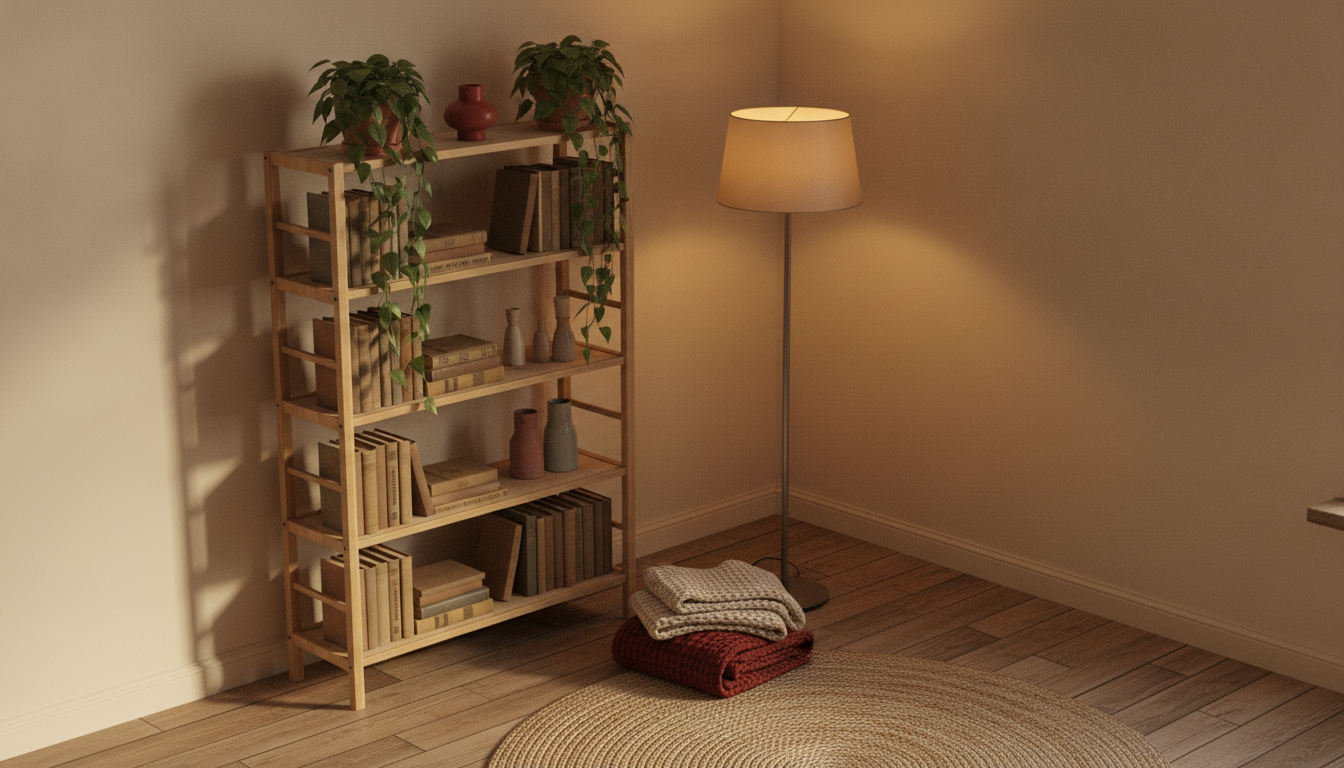
Tall bookshelves and open shelving units also do something subtle and important: they draw the eye upward, which makes low-ceilinged rentals feel taller. Fill them with a mix of books, objects, and plants — not just books, and not just objects — and they become the most personal-feeling wall in the room without a single nail going in.
The details that actually matter (and the ones that don't)
Throw pillows are fine. They're not going to save a bad layout or fix bad lighting. What they can do is tie together colors from your rug, your sofa, and your curtains so the room feels cohesive rather than assembled from separate shopping trips. Pick two or three colors from your larger pieces and repeat them in the smaller ones. That's the whole trick.
Curtains are underrated in rentals. Most apartments come with either no window treatments or plastic blinds. Hanging curtains — even on a tension rod if you can't drill — immediately makes a room feel more finished and more private. Go floor-to-ceiling if you can; it elongates the windows and makes the whole room feel bigger.
Plants are worth mentioning not because they're a trend but because they're one of the few things that make a space feel genuinely lived-in rather than staged. A large floor plant in a corner, a trailing plant on a shelf, something on the windowsill — they add life in a way that decor objects just don't.
What you can skip: accent walls achieved with removable wallpaper (the results are rarely as clean as the ads suggest), too many small decorative objects that just create visual noise, and furniture that's so oversized it makes the room feel cramped. Rentals are often smaller than you'd like — work with the scale, not against it.
A note on buying furniture for a rental
One hesitation a lot of renters have is spending real money on furniture for a place they might leave in a year or two. It's worth reframing: good furniture moves with you. A sofa, a media console, a pair of lamps — these aren't attached to the apartment. They're yours. Buy things you'd want in your next place, not just things that are cheap enough to abandon.
That said, you don't need to spend a fortune to get furniture that looks and feels considered. The pieces that tend to matter most in a living room — the sofa, the coffee table, the rug — are worth investing in at a reasonable level. The rest can be more budget-conscious without the room suffering for it.
If you're still figuring out how to approach furniture shopping online, the guide on buying furniture online for the first time covers what to check before you commit — dimensions, return policies, and what the photos aren't always telling you.
Your rental living room doesn't have to wait until you own a home to feel like it belongs to you. The furniture you choose, how you arrange it, and how you light it will do more than any landlord-approved renovation ever could.
Find renter-friendly furniture and decor at Select Furniture — free shipping across the USA.
Frequently Asked Questions
How do I hang things on rental walls without losing my deposit?
Adhesive strips (like Command strips) work for lightweight frames and small mirrors, but always check the weight limits on the packaging and test on a hidden spot first. For heavier pieces, leaning them against the wall — a large mirror, a framed print — is a cleaner solution than risking adhesive damage. Shelving units that stand on the floor rather than mount to the wall are another good alternative.
What size rug should I get for a rental living room?
Bigger than you think. In most living rooms, a rug that fits only under the coffee table looks like a bath mat that wandered in. Aim for a size where at least the front legs of your sofa and chairs can sit on it — this anchors the seating area and makes the room feel pulled together. When in doubt, size up rather than down.
Can I replace the light fixtures in a rental?
Generally, no — swapping hardwired fixtures involves electrical work and almost always requires landlord permission. The easier path is to ignore the ceiling fixture (or just swap the bulb for a warmer one) and layer in floor lamps and table lamps instead. Plug-in pendant lights that hang from a ceiling hook are another option that adds overhead interest without any wiring.
Is it worth buying good furniture if I'm only renting short-term?
Yes — because furniture moves with you. Unlike paint or built-ins, a sofa, a bookshelf, or a set of lamps goes to your next apartment or your first owned home. Buying pieces you actually love, rather than the cheapest thing available, means you're building a home over time rather than starting from scratch every time you move. Focus your budget on the pieces you use and see every day.