

The sofa is the room. That's the problem.
Walk into almost any living room and your eyes go straight to the sofa. It's the biggest object, it takes up the most visual real estate, and when it looks tired — faded, pilled, mismatched with everything else you've slowly accumulated — the whole room feels off, no matter how nice your rug or how carefully you arranged the throw pillows. You don't need a design degree to sense it. You just feel like the space never quite came together.
Replacing a sofa to fix that feeling is the obvious move. It's also an expensive one, and often an unnecessary one. The sofa frame is probably fine. The cushions are probably fine. What's letting the room down is the surface — the fabric, the texture, the color — and that's something you can actually change for a fraction of the cost.
Why texture is the shortcut to a modern look
Modern interior design, at its core, is about intentionality. Clean lines, tonal palettes, surfaces that look like they were chosen rather than inherited. What makes a room read as modern isn't necessarily the price tag of the furniture — it's whether the pieces feel like they belong together, and whether there's something visually interesting that rewards a second look.
Texture is how you create that without spending much. A flat, worn fabric surface reads as neglected. A fabric with deliberate relief pattern — something with geometric depth or a tactile motif — reads as a design choice. That distinction is the entire gap between a room that looks assembled and one that looks curated.
This is exactly why a well-chosen slipcover can do more for a living room than a new side table, a gallery wall, or even a new rug. It changes the sofa, which changes the room.
The concentric circle pattern: why it works
Not all slipcovers are created equal, and the pattern matters more than people realize. A plain slipcover in a solid color will hide wear, but it won't add anything. It's a patch job, and it reads like one.
A concentric circle jacquard pattern is different. Concentric circles — rings radiating outward from a center point — are one of the oldest geometric motifs in design, and they translate naturally into contemporary interiors because they're both structured and organic. They suggest intention without rigidity. On a sofa-scale textile, the pattern creates a subtle visual movement across the surface: your eye travels, finds rhythm, and the piece feels considered rather than covered up.
The jacquard weave itself adds another layer. Unlike a printed pattern, a jacquard pattern is woven directly into the fabric structure, which means the design has actual physical relief — you can feel the raised texture when you run a hand across it. That tactile quality is what separates a slipcover that looks like a slipcover from one that looks like upholstery.
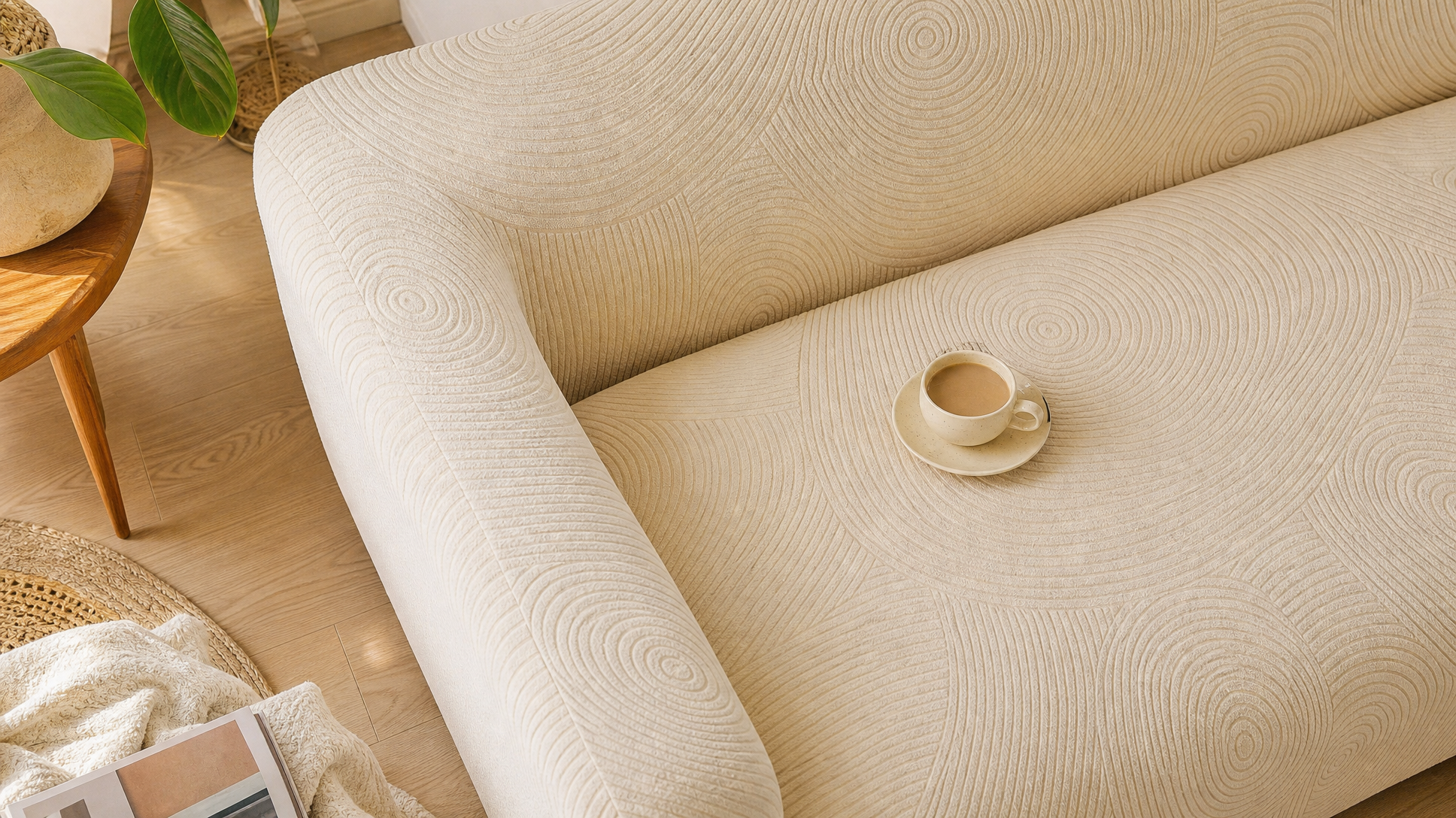
How the Concentric Circle Jacquard Plush Slipcover actually fits
The reason most people are skeptical of slipcovers is fit. The mental image is a saggy, bunched-up fabric draped over a sofa like a Halloween ghost costume. That's a fair concern about cheap, one-size-attempts-to-fit-all covers — but it's not what a high-elasticity stretch slipcover does.
The Elastic Stretch Sofa Cover Slipcover in Concentric Circle Jacquard Plush is made from a 95% polyester and 5% spandex blend, which gives it genuine two-way stretch. It pulls snugly over the sofa's contours rather than draping loosely over them, which is the difference between a tailored look and a draped one. The form-fit design means it follows the shape of the arms, the seat, and the back — no billowing fabric, no constant readjusting.
It also stays put. A non-slip elastic bottom keeps the cover anchored at the base, and foam anchors tuck into the gaps between cushions to hold everything in place even with regular use. If you have kids who treat the sofa as a trampoline, or a dog who insists on digging a nest before lying down, this matters a lot.
Installation takes minutes — stretch it on, tuck the anchors, smooth the surface. Removal is just as fast, which makes washing it straightforward and seasonal swaps genuinely practical rather than theoretical.
Building the rest of the room around it
Once the sofa surface changes, the rest of the room has something to respond to. Here's how to make the most of that shift without spending much more:
- Stay tonal, not matchy. The cream/off-white colorway shown in the product photo works with almost any neutral wall color. Rather than matching it exactly to other pieces, look for items in the same tonal family — warm whites, soft oatmeals, natural wood tones. Tonal layering reads as intentional; exact matching reads as a showroom floor.
- Add one texture contrast. The plush jacquard surface is soft and tactile. Balance it with something with a harder or more matte finish — a ceramic vase, a woven basket, a concrete or wood coffee table. One contrast is enough.
- Edit the pillow situation. Two or three pillows in shapes that complement the circular motif (round knot pillows, for example, echo the concentric pattern beautifully) will reinforce the design logic rather than fight it. More than three usually clutters the surface you just cleaned up.
- Clear the floor around the sofa. A sofa that looks intentional needs breathing room. If there's furniture crowding it from both sides, the new surface won't get the visual space it needs to register properly.
Who this is actually for
If your sofa is structurally sound but the fabric is faded, pilled, or just the wrong color for the direction your room has gone in — this is the fix. Same if you're renting and can't justify buying new furniture for a place you might leave in a year. Same if you have pets or young children and the idea of a pristine new sofa feels like an expensive joke.
A mid-range slipcover that fits well and looks deliberate is a smarter spend than a budget sofa you'll want to replace again in two years. And it's a fraction of what a reupholstery job costs, with none of the lead time.
If you're shopping for furniture online for the first time and weighing whether to buy a new sofa or work with what you have, this guide on what to check before you add to cart is worth reading before you commit to anything.
The sofa you already own is probably closer to the room you want than you think. Sometimes the only thing standing between a tired living room and a pulled-together one is a surface worth looking at.
Ready to make the swap? Shop the Concentric Circle Jacquard Plush Slipcover at Select Furniture — free shipping across the USA, easy returns, and it arrives ready to transform your sofa the same day it shows up at your door. Use code WELCOME5 on your first order for 5% off.
Frequently Asked Questions
Will a stretch slipcover fit my sofa if it has an unusual shape or curved arms?
High-elasticity stretch slipcovers are designed to accommodate a range of sofa shapes, including sofas with curved or rounded arms, because the fabric conforms to the contours rather than being cut to a fixed shape. That said, very unusually shaped sofas — like barrel-back designs or sofas with extremely wide flared arms — can be trickier. Check the product's size guide against your sofa's measurements before ordering, and if you're between sizes, size up rather than down for a cleaner fit.
How do I keep the slipcover from sliding around during everyday use?
This slipcover uses two mechanisms to stay in place: a non-slip elastic bottom that grips the base of the sofa, and foam anchors that you tuck into the gaps between the seat cushions and the sofa frame. Together, they hold the cover snugly even with active daily use — including kids and pets. If you find a section shifting over time, simply re-tuck the anchors and smooth the fabric back into place.
Can I machine wash the slipcover?
One of the main practical advantages of a slipcover over fixed upholstery is washability. The stretch polyester-spandex blend is designed for easy removal and cleaning. Always follow the care instructions on the product label — for most plush stretch covers, a gentle machine cycle in cold water and air drying (or low heat) preserves both the fabric texture and the elasticity longest.
Is a slipcover a good long-term solution, or just a temporary fix?
That depends on what you need it to do. If your sofa frame and cushions are in good shape, a well-fitted slipcover is a genuinely durable solution — not a patch job. It protects the original upholstery underneath, which actually extends the sofa's life. Many people keep the same slipcover for years and simply wash it seasonally. Others use the ease of removal as an opportunity to swap covers with the seasons or when they redecorate. Either way, it's far more than a stopgap.