

The Labels Are Everywhere. The Clarity Is Not.
You've been scrolling for an hour. One sofa is tagged "modern farmhouse," the next one is "contemporary," and the one you actually like says "transitional." At some point you stop reading the descriptions and just start clicking. Sound familiar?
The problem isn't your taste — it's that furniture style labels get applied so loosely online that they've almost stopped meaning anything. Knowing what each one actually looks like in a real room (not a staged photo shoot) makes the difference between buying something you love for years and buying something that looks great in a grid and awkward in your living room.
Here's an honest breakdown of the styles dominating search results right now, what they genuinely look like to live with, and which ones you might want to think twice about before committing.
"Modern" vs. "Contemporary" — They're Not the Same Thing
This is the most common mix-up, and it trips people up constantly.
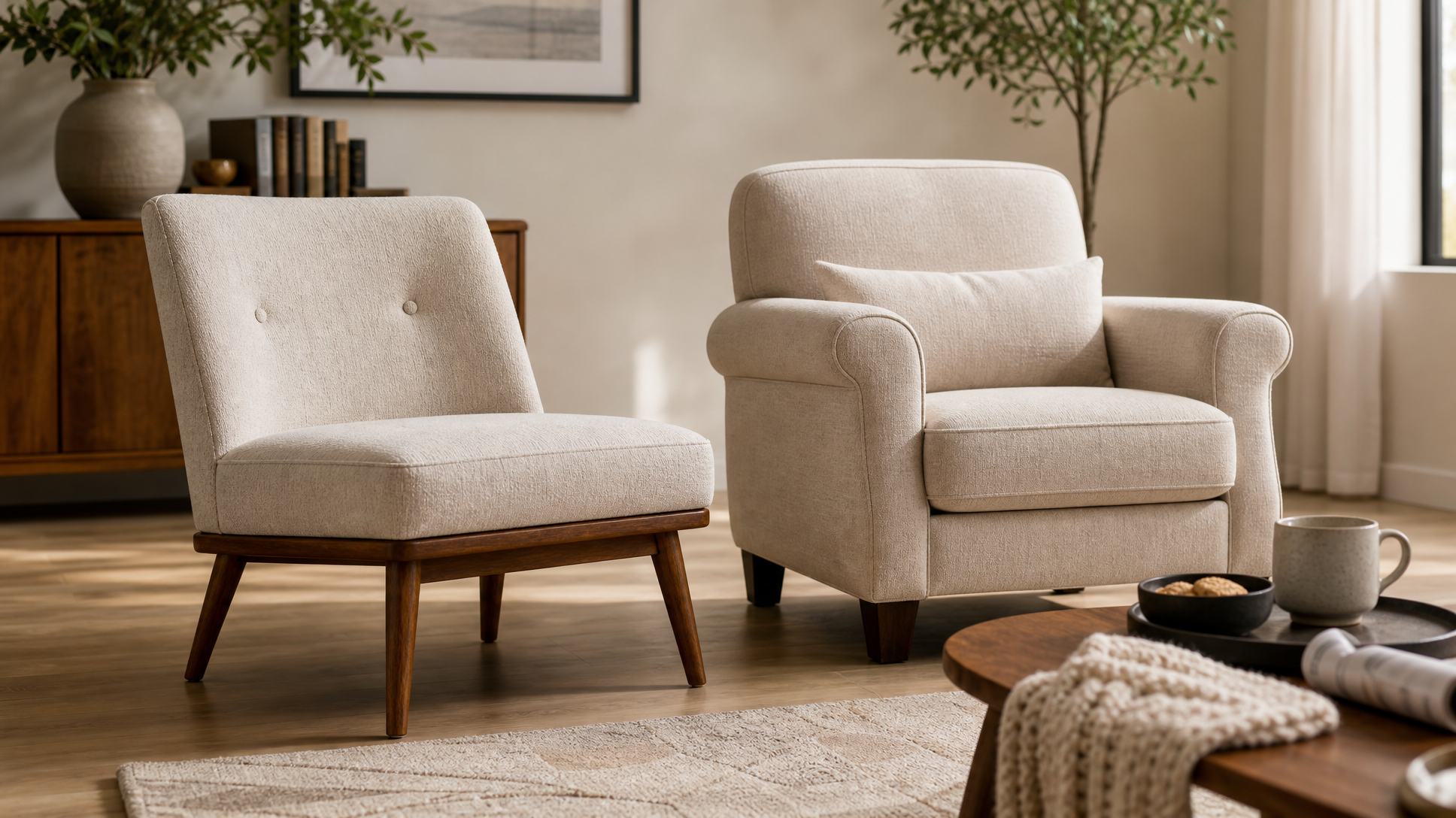
Modern furniture refers to a specific design era — roughly mid-20th century — defined by clean lines, natural materials like wood and leather, and a deliberate lack of ornamentation. Think low-profile sofas, tapered legs, and warm neutrals. It's a defined aesthetic with real historical roots, which is actually one of its strengths: it doesn't chase trends because it's already past them.
Contemporary furniture, by contrast, means whatever is current right now. It borrows from multiple styles, tends toward sleek silhouettes and neutral palettes, and shifts as design trends shift. A contemporary sofa in 2020 looked different from a contemporary sofa today. That's not a flaw — it just means the label tells you less about the piece's long-term staying power.
If a retailer calls something "modern contemporary," that's often marketing shorthand for "clean lines, neutral color, no fussy details." Which is fine — just know what you're actually buying.
Japandi: The Style Everyone Loves in Photos
Japandi is a genuine design movement that blends Japanese minimalism with Scandinavian warmth. The result: low furniture, natural textures (linen, light wood, rattan), muted earthy tones, and a lot of deliberate empty space.
It photographs beautifully. And it genuinely works as a living style — if you're someone who keeps surfaces clear, prefers calm over cozy, and doesn't mind a room that feels intentionally spare.
The honest caveat: Japandi has been everywhere on social media for the past few years, which means it's starting to feel saturated. It's not going anywhere soon — minimalism has staying power — but if you're drawn to it primarily because it looks good in flat lays, ask yourself whether that spare, uncluttered look actually matches how you live. A family room with kids and pets and a pile of throw blankets isn't a Japandi room, and that's completely fine.
Transitional: The Style That Actually Ages Best
Transitional furniture doesn't get the buzz that Japandi or modern farmhouse gets, but it's quietly the most practical choice for most homes.
Transitional design sits between traditional (think ornate details, curved legs, rich fabrics) and modern (clean lines, minimal decoration). The result is furniture that has some warmth and softness without looking dated, and some structure without feeling cold. A transitional sofa typically has a tailored silhouette, subtle rolled arms, and neutral upholstery — nothing that screams a particular decade.
That's exactly why it holds up. In five years, you can swap your accent chairs, change your rug, update your throw pillows — and your sofa still fits. Transitional pieces are the workhorses of long-term home design, and they're genuinely underrated.
Modern Farmhouse: Approaching Its Expiration Date
Modern farmhouse peaked hard around 2016–2019. Shiplap walls, barn doors, galvanized metal accents, distressed wood — it was everywhere, and for good reason. It felt warm and approachable at a moment when a lot of interior design felt cold and sterile.
The problem is that heavily trend-dependent styles date in a way that more restrained styles don't. If your entire room is built around the farmhouse aesthetic — the sliding barn door, the Edison bulbs, the word "GATHER" on the wall — it's going to feel of-its-moment in a way that a clean transitional or mid-century modern room won't.
That said, the underlying instinct — warmth, natural materials, unpretentious comfort — is sound. If you love it, lean into the elements that have staying power (solid wood, warm textiles, practical storage) and skip the ones that are pure trend signifiers.
How to Pick a Style You'll Actually Keep
Here's the real question to ask before you buy: Does this piece work in my room without the rest of the aesthetic propping it up?
A Japandi coffee table looks incredible surrounded by linen cushions and a neutral rug in a styled photo. But if your home is warm, layered, and full of color, that same table might just look out of place. Great furniture fits your actual life, not the version of your home that exists in your head.
A few practical tests before you commit:
- Look at it without the staging. Can you picture it in your actual room, with your actual stuff around it?
- Check the silhouette, not the finish. Finishes can be repainted or reupholstered. The shape of a piece — its proportions, its leg style, its overall form — is what you're really living with long-term.
- Ask how it fits the rest of the room. You don't need to match everything, but a piece that clashes with your existing furniture in scale or tone is going to bother you every time you walk in.
- Think about five years from now, not five minutes from now. The piece that photographs well today isn't always the one you'll still love when the trend has moved on.
If you're still figuring out your style footing, the guide on buying furniture online for the first time covers the practical side of what to check before you add anything to cart — worth a read before you pull the trigger.
The Bottom Line
"Popular right now" is a moving target. Transitional and mid-century modern have proven they can outlast trends. Japandi has real staying power if it genuinely suits how you live. Contemporary is useful shorthand but tells you little about longevity. And modern farmhouse, in its most recognizable form, is already past its peak.
The style that's right for your next purchase isn't the one that's trending — it's the one that fits your room, your life, and the way you actually want to feel when you walk through the door.
Browse Select Furniture's current collection — styles for every room, with free U.S. shipping and easy returns.
Frequently Asked Questions
What's the difference between modern and contemporary furniture?
Modern furniture refers to a specific mid-20th century design movement — clean lines, natural materials, minimal ornamentation. Contemporary furniture simply means whatever is current right now, and it shifts as trends shift. The two terms are often used interchangeably online, but they're not the same thing.
Is Japandi furniture going out of style?
Japandi is heavily saturated on social media right now, but its roots in minimalism give it more staying power than most trend-driven styles. The risk is buying it because it photographs well rather than because it suits how you actually live. If you naturally keep surfaces clear and prefer calm, spare spaces, it's a solid long-term choice.
Which furniture style is easiest to mix with what I already own?
Transitional furniture is generally the easiest to mix because it sits between traditional and modern — it has enough warmth to pair with older, more ornate pieces and enough structure to work alongside cleaner contemporary ones. Neutral upholstery and simple silhouettes give you the most flexibility as your room evolves over time.
How do I know if a furniture style will still look good in five years?
Focus on the silhouette and proportions rather than the finish or surface details. Shapes that are neither extreme nor gimmicky tend to age well. Also ask yourself whether the piece would still work if the trend it's associated with disappeared tomorrow — if the answer is yes, it's probably a safe long-term buy.